

FTL-A1R
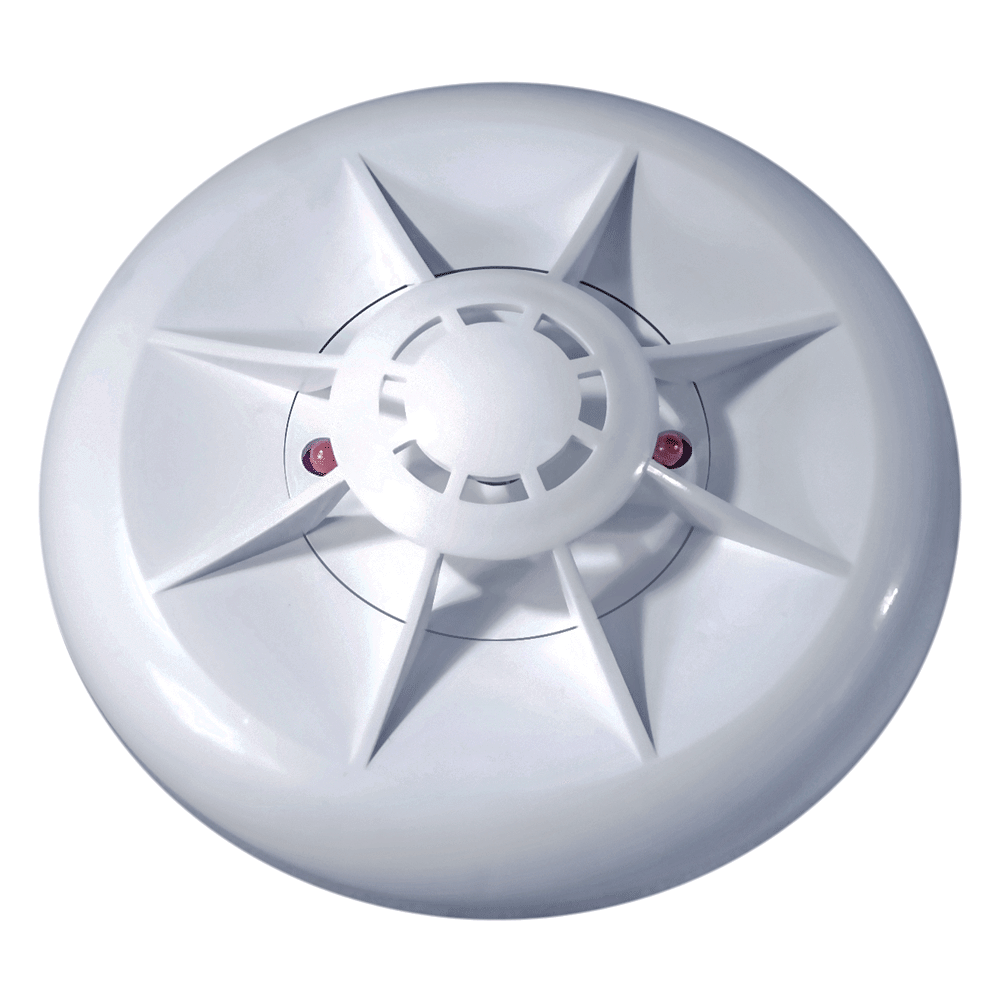
Product description 
The maximum differential thermal fire detector with an indication of the duty mode, intended for monitoring the ambient temperature in closed rooms of various buildings and structures, including unheated ones.
Classification of detectors of the FT series
| Group | Name | Class | Response temperature | Indication of the standby mode |
| 1 | FT-A1 | A1 | 54 - 65 | - |
| FT -A2 | A2 | 54 - 70 | ||
| FT-B | B | 69 - 85 | ||
| FTL-A1 | A1 | 54 - 65 | ||
| 2 | FTL -A2 | А2 | 54 - 70 | + |
| FTL -B | B | 69 - 85 | ||
| FT - A1S | А1S | 54 - 65 | ||
| 3 | FT - A2S | A2S | 54 - 70 | - |
| FT - BS | BS | 69 - 85 | ||
| FTL - A1S | A1S | 54 - 65 | ||
| 4 | FTL - A2S | A2S | 54 - 70 | + |
| FTL - BS | BS | 69 - 85 | ||
| Maximum-differential thermal detectors with microcontroller signal processing and with an indication of the standby mode | ||||
| 5 | FTL - A1R | A1R | 54 - 65 | + |
| FTL - A2R | A2R | 54 - 70 | ||
| FTL -BR | BR | 69 - 85 | ||
- Type - maximum-differential
- Reacts to the rate of temperature rise
- Improved schematic solutions
- High resistance to false alarm
- Non-removable renewable
- Two-mode with remote return to the initial state
- Optical indication of the "Fire" mode with two LEDs
- Optical indication of standby mode
- Ease of installation and maintenance
- Small consumption currents
- Compatibility with various FACP
- Wide range of supply voltage
Specifications
Characteristic
Value
Current consumption in standby mode:
0.1 mA
The method of connecting to the FACP
two-wire AL
Overall dimensions:
not more than 85 × 33 mm
Mass:
no more than 0.05 kg
The presence of an indication of the alarm mode:
Yes
The way of forming the output signal:
contactless
Static operating temperature range:
54-65 º С
Class according to DSTU EN54-5
A1R
Useful materials
| Name | Country | Comment | Open | Download |
|---|---|---|---|---|
| Manual | english | |||
| Сertificate | UA(Ukraine) | Valid from January 14, 2022 to January 13, 2025 | ||
| Scheme | zip file of CorelDRAW cdr files of connection schemes |
Devices with which it is used