

SPD-3.3-N
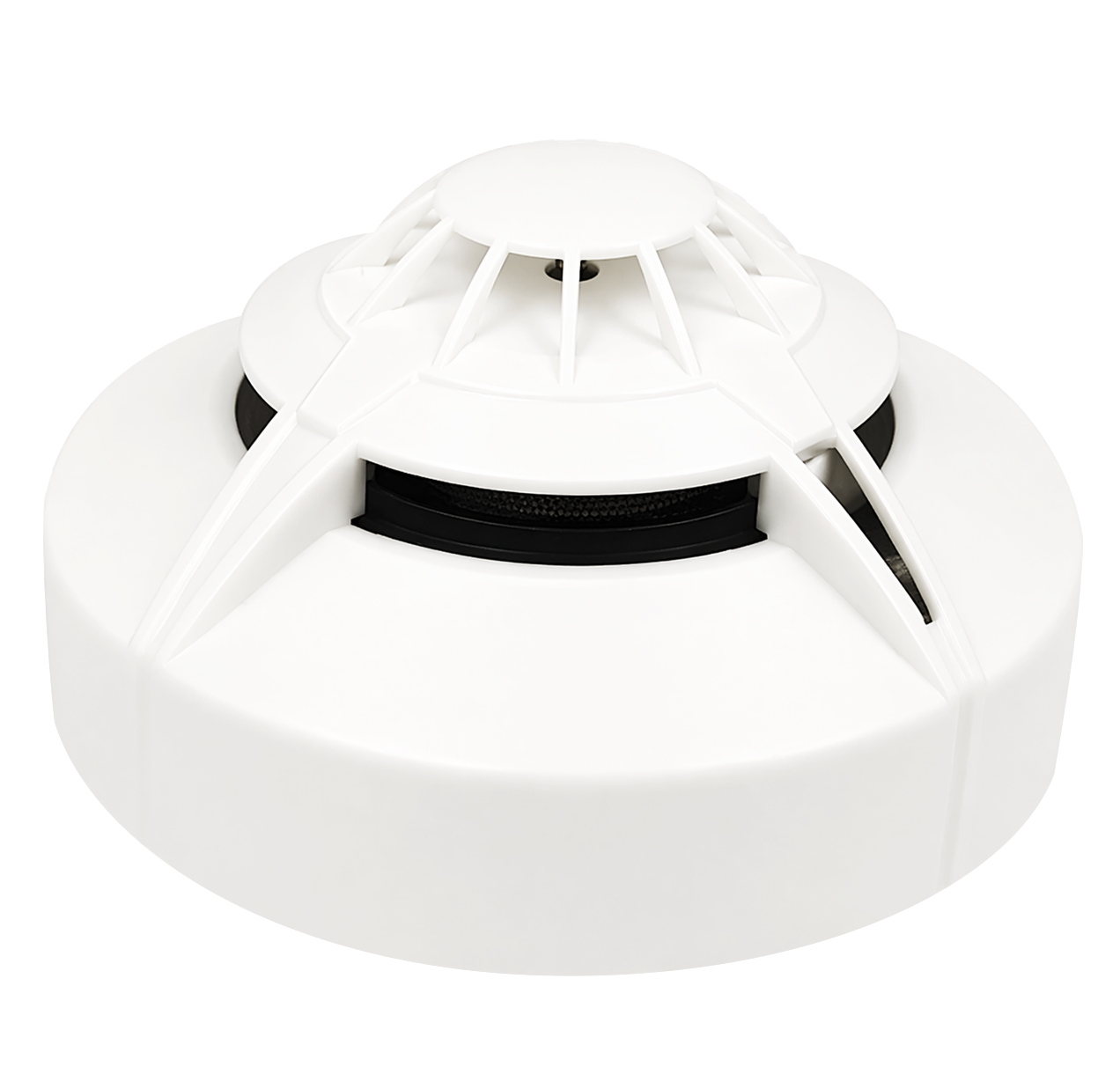
Product description 
The SPD-3.3-N detector is designed to detect fires inside buildings and structures, accompanied by the appearance of smoke and an increase in temperature, as well as to transmit a “FIRE ALARM” signal to the control panel.
- Features
- the detector is used in a four-wire loop, the output signal is formed by the contacts of the built-in relay;
- has a self-diagnostic function with appropriate indication;
- sensitive to a wide range of smoke types, which is necessary for general use in fire alarm systems for buildings (in accordance with the requirements of DSTU EN54-29);
- performs the function of sensitivity drift compensation with the corresponding indication after reaching the compensation limit level (meets the additional requirements of DSTU EN54-29):
- provides indication of operating modes using built-in optical indicators (duty, fire, exceeding the compensation limit level, malfunction);
Specifications
Characteristic
Value
The sensitivity of smoke and heat channels meets the requirements of DSTU EN54-29;
Rated supply voltage, V:
12
Supply voltage range, V
from 10 to 15
Current consumption in standby mode, mA
no more than 0,10
Current consumption in "Fire" mode, mA
no more than 22
Technical readiness time after power supply, s
no more than 30
Inertia, s,
no more than 10
Method of forming the output signal
contact
Voltage switched by relay contacts, V
no more than 36
Current switched by relay contacts, mA
no more than 100
Resistance of open relay contacts, kOhm
no less than 500
Resistance of closed relay contacts, Ohm
no more than 5
Degree of protection of the detector housing
IP30
Operating temperature range, °C
from -10 to +55
Relative air humidity, %
up to 93 at 40 °C;
Average service life, years
no more than 10
Overall dimensions, mm
100 × 62
Weight, kg,
no more than 0,15
Useful materials
| Name | Country | Comment | Open | Download |
|---|---|---|---|---|
| Manual | UA(Ukraine) | ukrainian | ||
| Сertificate | UA(Ukraine) | valid from 04/07/2026 to 04/06/2029. |
Devices with which it is used